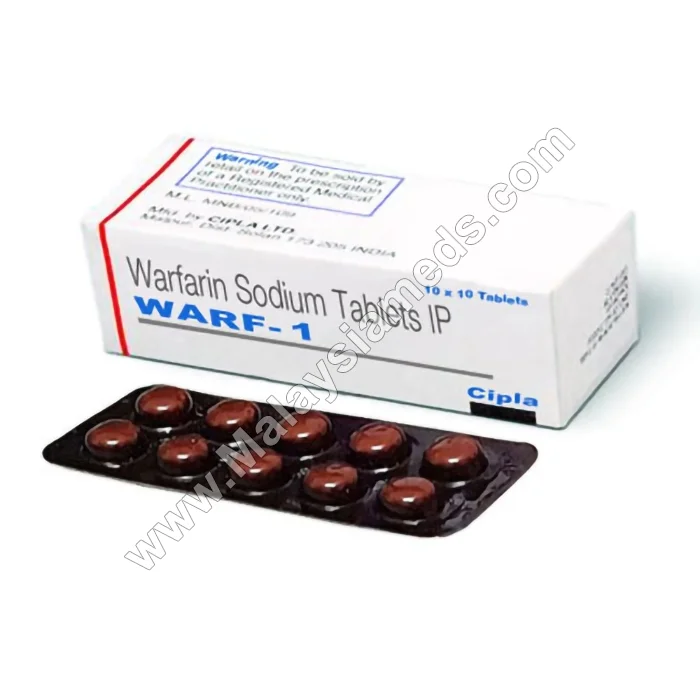
What is Warfarin 1 mg?
Warfarin 1 mg is a prescription medication containing the active ingredient Warfarin, a well-established anticoagulant used primarily to prevent and treat blood clots. Manufactured by Cipla Limited, this medication plays a crucial role in reducing the risk of serious conditions caused by blood clots, such as stroke and deep vein thrombosis.
This medication works by interfering with the blood's clotting process, which helps to maintain smooth blood flow through the veins and arteries. It is widely prescribed across various healthcare settings in Malaysia to patients who require long-term prevention of clot formation.
Warfarin 1 mg is available as oral tablets that must be taken under strict medical supervision. Because dosing is individualized based on patient-specific factors, consistent monitoring is essential to ensure effective and safe treatment.
Uses of Warfarin 1 mg
- Prevention of stroke in patients with atrial fibrillation
- Treatment and prevention of deep vein thrombosis (DVT)
- Prevention of pulmonary embolism (PE)
- Prevention of blood clots after certain types of heart valve replacement
- Management of patients with certain types of congenital or acquired blood clotting disorders
How Warfarin 1 mg Works
Warfarin 1 mg functions as an anticoagulant by inhibiting the synthesis of vitamin K-dependent clotting factors in the liver. This action slows the blood’s ability to form clots, which helps to keep blood flowing freely in the body’s circulatory system. By managing coagulation balance, Warfarin reduces the risk of dangerous clot formation without completely stopping the body's natural clotting processes.
How to take Warfarin 1 mg
Always follow your healthcare provider’s instructions when taking Warfarin 1 mg. It is typically taken once daily, at the same time each day, to maintain consistent blood levels. Tablets should be swallowed whole with water and can be taken with or without food.
Regular blood tests to monitor the International Normalized Ratio (INR) are necessary to adjust the dose safely. Avoid missing doses and do not stop taking Warfarin without consulting your doctor, as this can significantly increase the risk of clotting.
Benefits of Warfarin 1 mg
- Effectively reduces the risk of stroke and embolism
- Prevents formation of dangerous blood clots
- Improves long-term cardiovascular health in at-risk patients
- Widely used and extensively studied anticoagulant
- Dosed flexibly to meet individual patient needs
Dosage and Administration
The dosage of Warfarin 1 mg depends on the patient’s medical condition, age, weight, diet, and response to treatment. Healthcare professionals typically start with a low dose and adjust based on INR blood test results to maintain a therapeutic range.
It is critical to attend all laboratory appointments for INR measurement. Do not change doses without consultation. Overdose or underdose may lead to serious complications such as bleeding or clot formation.
Who Should Use Warfarin 1 mg?
Warfarin 1 mg is indicated for patients who are at risk of developing harmful blood clots. This includes individuals with atrial fibrillation, mechanical heart valves, history of thrombosis, or those recovering from certain surgeries that increase clotting risk.
Who Should Avoid Warfarin 1 mg?
Patients who should avoid Warfarin include those with active bleeding, bleeding disorders, recent brain or spinal injuries, severe liver or kidney disease, pregnancy, or those who have known hypersensitivity to Warfarin or its components.
Side Effects of Warfarin 1 mg
- Unusual bleeding or bruising
- Red or dark brown urine
- Black or tarry stools
- Prolonged bleeding from cuts
- Frequent nosebleeds
- Severe headache or dizziness
- Abdominal pain or swelling
- Skin rash or itching
- Hair loss
- Fatigue or weakness
Safety Advice
- Inform your doctor of all medications and supplements you are taking
- Inform healthcare providers you are on Warfarin before any procedure
- Avoid alcohol and foods high in vitamin K without consulting your doctor
- Do not stop or change dosage without medical advice
- Wear a medical alert bracelet indicating Warfarin use
- Be cautious to avoid injuries and bleeding
- Report any signs of bleeding or severe side effects immediately
Drug Interactions
- Antibiotics may increase Warfarin effect
- Nonsteroidal anti-inflammatory drugs (NSAIDs) increase bleeding risk
- Vitamin K supplements and some foods can reduce anticoagulant effect
- Certain antifungal and antiviral drugs affect Warfarin metabolism
- Herbal supplements such as St. John’s Wort can interfere with Warfarin
Storage Instructions
Store Warfarin 1 mg tablets at room temperature away from moisture and heat. Keep the medication in its original container tightly closed and out of reach of children. Do not use after the expiration date printed on the package.
Where to buy Warfarin 1 mg in Malaysia?
Warfarin 1 mg is available at licensed pharmacies and healthcare facilities across Malaysia. It requires a doctor's prescription, so consult your healthcare provider for evaluation and prescription. Avoid purchasing from unverified online sources to ensure you receive genuine medicines.
Frequently Asked Questions (FAQ)
What is the price of Warfarin 1 mg in Malaysia?
Prices vary by pharmacy but Warfarin 1 mg is generally affordable. It is best to check with local pharmacies or authorized sellers for current pricing.
What happens if I miss a dose?
Take the missed dose as soon as you remember on the same day. Do not double doses the next day. Contact your doctor if you are unsure.
Where can I find Warfarin 1 mg for sale?
You can purchase Warfarin 1 mg at licensed pharmacies in Malaysia with a prescription. Avoid unauthorized sellers to ensure medicine safety.
Is Warfarin 1 mg available in Malaysia?
Yes, Warfarin 1 mg is available in Malaysia and widely used in clinical practice under doctor supervision.
Can I eat foods high in vitamin K while taking Warfarin 1 mg?
Maintain consistent intake of vitamin K-rich foods and inform your doctor. Sudden changes can affect Warfarin effectiveness.
How often do I need INR blood tests during Warfarin therapy?
INR tests are typically done weekly at the start, then less frequently as treatment stabilizes. Follow your doctor’s schedule.
Are there any alternatives to Warfarin 1 mg?
Other anticoagulants exist, but Warfarin is preferred in many cases. Your doctor can advise on the best option based on your condition.
Conclusion
Warfarin 1 mg by Cipla Limited is a trusted medication extensively used for preventing and managing blood clots. With careful monitoring and adherence to medical advice, it effectively reduces the risk of life-threatening clot-related complications. Patients in Malaysia requiring anticoagulation therapy can rely on Warfarin 1 mg for safe and effective treatment under professional guidance.

Leave A Review