
Write a review
Tretinoin 0.1% Cream (Tretinoin) | ||||
|---|---|---|---|---|
| 0.1% | Price | Price/unit | Qty | Cart |
| 3 Cream/s | $20.00 | $6.67 / Cream | ||
| 6 Cream/s | $40.00 | $6.67 / Cream | ||
| 9 Cream/s | $55.00 | $6.11 / Cream | ||
Alternative Medicine
View More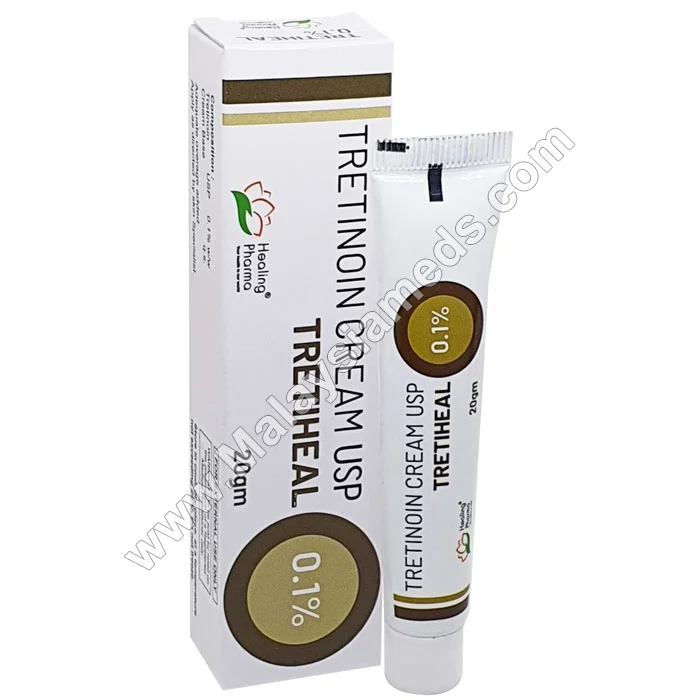
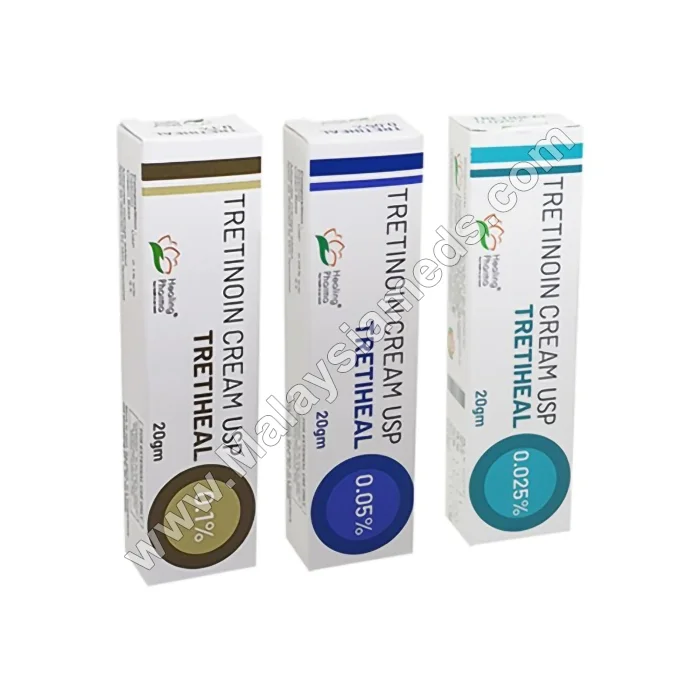
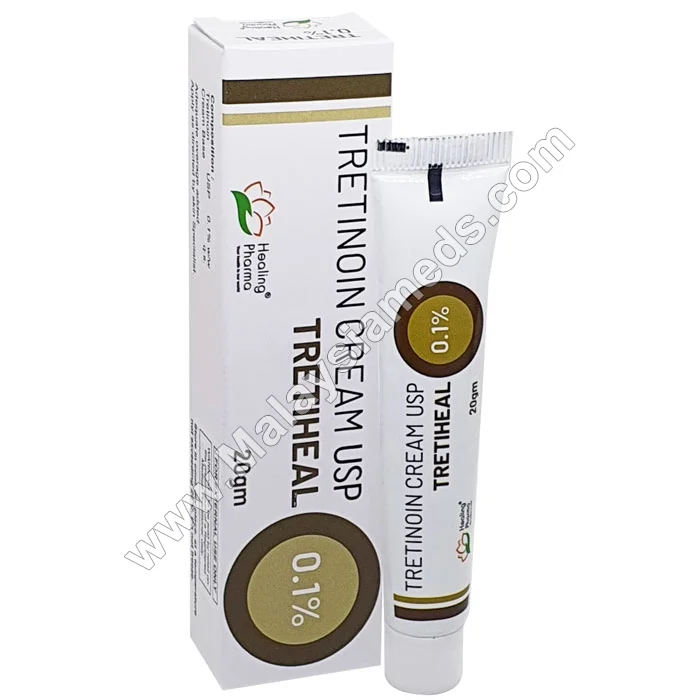
Tretinoin 0.1% Cream is a topical retinoid used in the treatment of acne. Tretinoin is the acid form of vitamin A (all-trans retinoic acid) and has been used in dermatology for many years. The 0.1% concentration is the strongest tretinoin cream strength in the usual 0.025%, 0.05% and 0.1% range, which makes it a product for people whose skin has already learned to tolerate a retinoid rather than a first-time starting point. This cream is supplied in a 20 gm tube by Healing Pharma, India, and is listed here for customers in Malaysia.
This guide explains what the cream is, how tretinoin works on the skin, who it is generally suited to, how it is normally applied, what a realistic timeline looks like, and which side effects and safety points deserve attention. It is general information to help you prepare for a conversation with a doctor or pharmacist. It does not replace personal medical advice.
What Is Tretinoin 0.1% Cream?
Tretinoin 0.1% Cream contains 0.1% w/w of tretinoin in a cream base. Tretinoin belongs to the retinoid family, alongside adapalene, tazarotene and isotretinoin. Unlike benzoyl peroxide or topical antibiotics, retinoids do not work mainly by killing bacteria. They change how the cells lining the hair follicle behave, and that in turn changes how pores become blocked.
A cream base is usually kinder than a gel or solution for people with normal, combination or dry skin, because it contains emollient ingredients that soften some of the dryness and flaking that retinoids cause.
Product Details
- Active ingredient: Tretinoin 0.1% w/w
- Form: Topical cream
- Indication: Acne
- Pack size: 20 gm in 1 tube
- Manufacturer: Healing Pharma, India
- Delivery time: 6 to 15 days
How Tretinoin Works on the Skin
Acne begins deep inside the hair follicle. Dead skin cells that should shed normally instead stick together and mix with sebum, the skin's natural oil. This forms a tiny plug called a microcomedone, which is too small to see. As the plug enlarges it becomes a blackhead or a whitehead, and if bacteria multiply inside it, the follicle can become red, swollen and tender.
Tretinoin interferes with this sequence in several ways:
- It increases cell turnover. Cells in the follicle lining are encouraged to shed instead of clumping together, so new plugs are less likely to form.
- It helps clear existing plugs. Blackheads and whiteheads that are already present are gradually pushed towards the surface.
- It supports skin texture. With continued use, tretinoin may help roughness and the dark marks that can linger after spots heal.
Because the main effect is prevention of new plugs, tretinoin works best as a steady, long-term treatment. It is not a spot treatment that acts overnight, and improvement is usually seen over weeks to months rather than days.
Who Is Tretinoin 0.1% Cream For?
Tretinoin creams are used mainly for acne vulgaris, particularly where blackheads and whiteheads (comedones) are a prominent feature. Acne is the indication shown on this product page.
The 0.1% strength is usually considered by people who:
- Have already used a lower strength, such as tretinoin 0.05% cream, for a good period of time and tolerated it without major problems.
- Have persistent comedonal acne that has not responded enough to lower strengths.
- Have been advised by a doctor to use a higher-strength retinoid and are comfortable with closer monitoring of their skin.
It is generally not where people begin. Someone who has never used a retinoid is typically advised to start with a lower strength, because starting at the highest concentration makes marked redness, burning and peeling much more likely. People with very sensitive, easily reddened or eczema-prone skin should discuss the strength with a doctor before choosing 0.1%.
How to Use Tretinoin 0.1% Cream
Always follow the directions given by your doctor or pharmacist and read the leaflet supplied with your pack. The guidance below describes how topical tretinoin is commonly labelled and used.
Application Steps
- Cleanse gently. Wash your face with a mild, non-soap cleanser and lukewarm water. Avoid scrubs and strongly foaming cleansers.
- Dry fully. Wait until the skin is completely dry, often 20 to 30 minutes after washing. Damp skin absorbs more cream and tends to sting more.
- Use a small amount. A pea-sized amount is typically enough for the entire face. Using more does not speed up results and mainly increases redness and peeling.
- Apply a thin layer at night. Dot the cream over the forehead, cheeks, nose and chin, then smooth it out thinly. Keep it away from the eyelids, lips, corners of the nose and corners of the mouth.
- Moisturise if needed. A plain, fragrance-free moisturiser can ease tightness and flaking.
- Wash your hands. This avoids transferring cream to your eyes or other sensitive areas.
How Often to Apply
Tretinoin is normally applied once daily in the evening, as directed by a doctor. Because this is the strongest strength, many prescribers suggest a gradual build-up, such as a couple of nights a week at first, then more nights as the skin settles. Do not apply more often than directed, and do not apply it more than once a day.
Daytime Sun Protection
Tretinoin makes skin more sensitive to sunlight. In Malaysia's strong, year-round sun, a broad-spectrum sunscreen each morning is essential, together with shade or a hat when outdoors. Avoid sunlamps and tanning beds entirely.
What to Expect: A Realistic Timeline
Many people stop tretinoin early because they expect quick results.
- Weeks 1 to 4: Dryness, redness, flaking and tightness are common, and may be more noticeable with 0.1% than with lower strengths. Some people see a temporary increase in spots, often called a retinoid purge, as existing plugs are pushed to the surface.
- Weeks 4 to 8: Irritation often eases as the skin adapts, and the purge usually settles.
- Weeks 8 to 12: Many people begin to notice fewer new spots, fewer blackheads and a smoother feel.
- Three to six months and beyond: Gradual further improvement in texture and marks may occur, and benefits depend on continuing treatment.
If irritation is severe, or if you see no improvement after about three months of correct use, speak with your doctor instead of applying more cream. A lower strength or a different routine may suit you better.
Possible Side Effects
Side effects are mostly local to the skin and depend on strength, amount applied and how quickly the cream is introduced. Because 0.1% is the highest concentration, irritation is more likely and can be more pronounced than with the lower creams. Commonly reported effects include:
- Dryness and peeling
- Redness
- Stinging or burning, especially soon after application
- Itching
- Greater sensitivity to sun, wind and cold
- A temporary flare of acne in the early weeks
Less commonly, people develop marked swelling, blistering, crusting or intense burning. If this happens, stop using the cream and contact your doctor. Lighter or darker patches of skin have also been reported with retinoids. Seek urgent medical help for signs of an allergic reaction, such as a widespread rash, swelling of the face or lips, or difficulty breathing.
Ways to Reduce Irritation
- Begin with fewer applications per week and increase slowly.
- Keep to a pea-sized amount.
- Moisturise every day with a gentle, fragrance-free product.
- Avoid scrubs, alcohol-based toners, astringents and harsh peels on treated skin.
Important Warnings and Precautions
Pregnancy and Breastfeeding
Oral retinoids are known to cause birth defects, and topical tretinoin is generally avoided during pregnancy as a precaution. Tell your doctor before starting if you are pregnant, planning a pregnancy or breastfeeding. Do not begin or continue the cream in these situations without medical advice.
Who Should Not Use It
- Anyone allergic to tretinoin or to any ingredient in the cream.
- People with sunburn, eczema or broken, inflamed skin in the area to be treated.
- People with a history of skin cancer, who should talk to a doctor first.
Sensitive Areas
Do not apply the cream to the eyes, eyelids, lips, inside the nostrils or inside the mouth, and avoid the folds beside the nose and mouth. If the cream gets into these areas, rinse thoroughly with water.
Other Medicines and Skincare
Tell your doctor or pharmacist about every medicine and skincare product you use. Products containing benzoyl peroxide, salicylic acid, sulphur, resorcinol or strong exfoliating acids can add to dryness and irritation, and may need to be used at different times of day or on different days. Tretinoin is not normally combined with oral isotretinoin unless a specialist directs it.
Comparison With Related Products
Tretinoin Strengths
Tretinoin creams are commonly available as 0.025%, 0.05% and 0.1%. A higher percentage does not always give better results for every person, and it often brings more irritation.
- 0.025%: the usual starting point with the gentlest profile. See tretinoin 0.025% cream.
- 0.05%: a middle option for people who have adjusted to the lower strength.
- 0.1%: the strongest cream, generally for people who tolerate retinoids well and need more activity.
Other Acne Options
- Adapalene: another retinoid, often described as gentler on the skin. Adapalene gel is usually an alternative to tretinoin rather than something used with it.
- Benzoyl peroxide: works against acne bacteria and is sometimes used in the morning while a retinoid is used at night. Benzoyl peroxide 5% gel can bleach fabric, so keep it away from towels and pillowcases.
- Azelaic acid: helpful for acne and for marks after spots, and usually well tolerated. See azelaic acid 10% cream.
Never combine treatments on your own. Ask a doctor or pharmacist how to space them across the day.
Habits That Support Treatment
A medicine works best when the rest of your routine supports it:
- Cleanse twice daily with a mild cleanser. Over-washing damages the skin barrier and makes retinoid irritation worse.
- Choose non-comedogenic products labelled oil-free or non-pore-blocking, including makeup and sunscreen.
- Do not pick or squeeze spots. This raises the risk of scarring and long-lasting dark marks.
- Wear sunscreen every morning, including on cloudy days, and reapply if outdoors for long periods.
- Be consistent. Frequent missed applications make it harder to judge whether the treatment is working.
Frequently Asked Questions
Is tretinoin 0.1% cream stronger than 0.05%?
Yes. It contains twice the concentration of tretinoin and is the strongest of the common cream strengths. That can mean more activity but also a higher chance of redness, dryness and peeling, so it is usually reserved for people who already tolerate a retinoid.
Can I use it if I have never used a retinoid?
Doctors generally advise first-time users to begin with a lower strength and move up if needed. Starting at 0.1% increases the likelihood of significant irritation. Discuss your skin type and history with a doctor or pharmacist before deciding.
Is it the same as isotretinoin?
No. Tretinoin is applied to the skin, while isotretinoin is an oral medicine for severe acne that is closely monitored by doctors. They are chemically related but are different medicines with different safety rules.
Why is my skin peeling and red?
Peeling and redness reflect faster skin cell turnover and are common in the first weeks, especially at higher strengths. Using less cream, applying it less often and moisturising usually helps. If the skin looks raw, blisters or burns badly, stop and speak with your doctor.
Do I need to keep using it after my skin clears?
Acne often returns when treatment stops, so many doctors recommend continuing a retinoid for maintenance, sometimes at a lower strength or frequency. Ask your doctor how long to continue and when it is reasonable to step down.
Availability and Ordering Information
Tretinoin 0.1% Cream (Healing Pharma, India) is a prescription-type medicine and should be used under medical guidance. Availability changes from time to time, so please check the stock status shown at the top of this page before ordering. The delivery time listed for this product is 6 to 15 days. If you are unsure which strength is right for your skin, speak with a doctor or pharmacist first.
Disclaimer: This information is for general education and is not a substitute for professional medical advice, diagnosis or treatment. Always follow the instructions of your doctor or pharmacist and read the patient leaflet supplied with the medicine.
No reviews yet.
Tretinoin 0.1% Cream (Tretinoin) Is Out Of Stock
Sorry! Tretinoin 0.1% Cream (Tretinoin) Is Out Of Stock.
Please click below to view other similar medications.
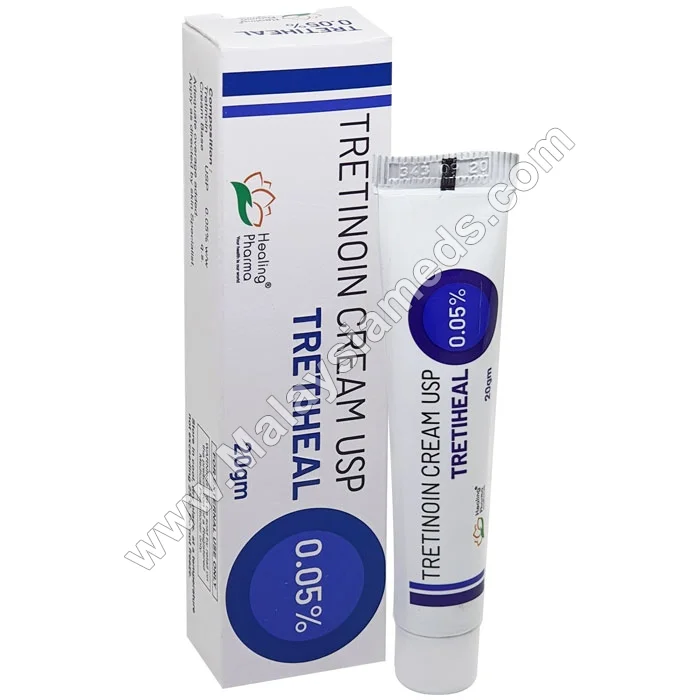
Tretiheal 0.05% Cream (Tretinoin)
View Treatment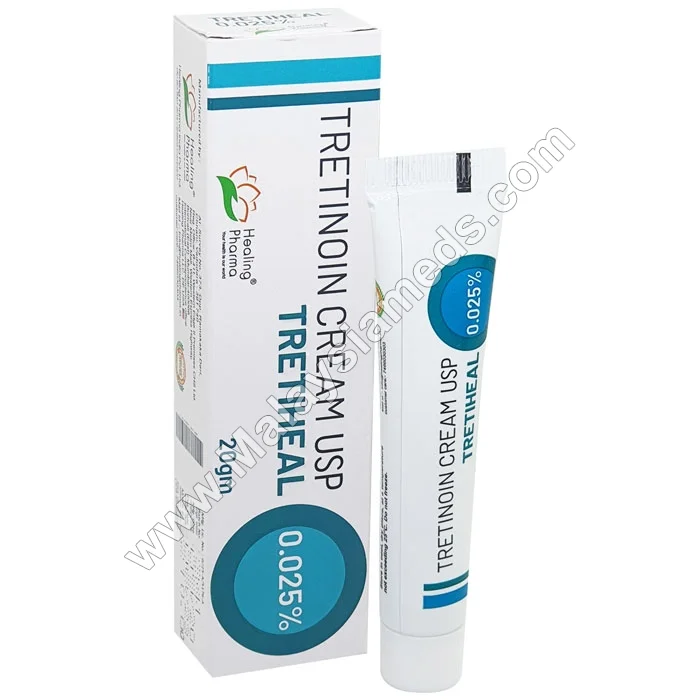
Leave A Review